Go To Market Strategy for Enterprise SaaS & Tech Organisations
Enterprise SaaS teams face a different GTM challenge to a first launch: multiple stakeholders, longer sales cycles, and a motion that has to work consistently across regions, business units, and product lines at once. The hardest part usually isn't generating demand — it's building a repeatable, aligned pipeline that scales with the organisation instead of depending on one high-performing team.
Get Your Complimentary Copy of the Book
This complimentary book lays out a practical, step-by-step framework for finding the right niche, building a message that resonates, and running the digital and content marketing campaigns that generate consistent revenue.
It covers the same foundational principles Hat Media applies when building GTM engines for enterprise SaaS teams — the touchpoints, platforms, and sequencing needed to break into a market and keep scaling once you're in it.
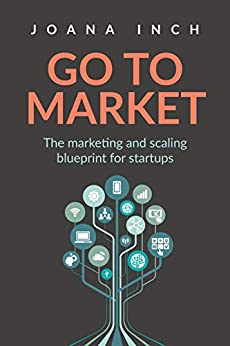
Request your free copy
Fill in your details and we'll send the book straight to your inbox.
Request Your Free CopyDiscover how to:
- Nail your niche and write copy that cuts through
- Construct your buyer journey from awareness to customer
- Discover the best digital marketing channels to use for your business
- Create a predictable recurring pipeline
- Scale and go global
What Is a Go-To-Market Strategy?
A go-to-market (GTM) strategy is the plan a company uses to bring a product to a defined audience and convert that audience into paying customers in a repeatable way. For most SaaS organisations, it covers four things at minimum: who the ideal customer is, what problem the product solves for them, which channels will reach them cost-effectively, and how sales and marketing will work together to turn attention into revenue.
A GTM strategy is different from a marketing plan — marketing is one component inside it, alongside sales process, pricing, positioning, and the systems used to track and improve performance over time. It's also different from a single product launch: a launch is one event, while a GTM strategy is the repeatable engine that keeps producing pipeline after the launch buzz fades.
Go-To-Market Motions: Product-Led, Sales-Led, or Hybrid
Not every GTM strategy runs through a sales team. Which motion fits depends on price point, deal complexity, and how much guidance a buyer needs before they trust the product.
| Motion | Starting Point | Best For | Key Metric |
|---|---|---|---|
| Product-Led (PLG) | Free trial or freemium product usage | Low-touch, self-serve tools with fast time-to-value | Product qualified leads, activation rate |
| Sales-Led (SLG) | Outbound and marketing-qualified leads | Complex, high-ACV deals with multiple stakeholders | Pipeline created, win rate |
| Hybrid | Product usage that triggers a sales conversation | Mid-market SaaS scaling from self-serve into enterprise | Expansion revenue, sales-assisted conversion |
Most enterprise SaaS organisations run sales-led or hybrid motions by default, given deal complexity and multiple stakeholders — product-led elements are usually layered in for lower-tier or self-serve segments alongside the core enterprise motion, rather than replacing it.
Start Your GTM Journey With This Inbound Workbook
A companion workbook to help you apply the framework to your own business.
The 7-Step Go-To-Market Framework
This is the same sequence Hat Media uses with founders and B2B SaaS teams to turn a product into a predictable, scalable pipeline. Each step builds on the last — skipping one is usually where a GTM strategy starts to wobble.
Understand Your Market
Before launching, conduct in-depth market research to identify:
- Target Audience: Who are your ideal customers, and what are their pain points?
- Competitors: What's your differentiation? Analyse their strengths, weaknesses, and positioning.
- Trends & Demand: Validate demand for your solution in the current market context.
Define Your Value Proposition
Craft a compelling value proposition that clearly communicates:
- The problem your product solves.
- The unique benefits it offers.
- Why customers should choose you over competitors.
Keep it concise, customer-focused, and tailored to specific segments.
Build Your Buyer Personas and ICPs (Ideal Customer Profiles)
Segment your audience into detailed buyer personas and create ICPs to guide targeting. Include:
- Demographics: Location, industry, company size, job titles.
- Psychographics: Goals, challenges, and decision-making drivers.
- Behavioural Insights: Purchase triggers and preferred channels.
Develop a Multi-Channel Marketing Strategy
Create a marketing plan that incorporates:
- Content Marketing: Blogs, videos, and case studies tailored to your audience's needs.
- Social Media: Build awareness and engagement through platforms where your audience is active.
- Paid Campaigns: Use PPC, retargeting, and LinkedIn ads to accelerate awareness and lead generation.
Establish a Sales Enablement Process
Ensure sales and marketing alignment by:
- Developing lead qualification criteria.
- Providing sales collateral such as decks, case studies, and ROI calculators.
- Building a sales process that moves leads smoothly through the funnel.
Leverage Technology to Scale
Implement tools to support scalability and efficiency:
- CRM (e.g., HubSpot): Centralise customer data and track engagement.
- Marketing Automation: Nurture leads with targeted campaigns.
- Analytics Tools: Monitor performance and refine tactics with data-driven insights.
Measure, Learn, and Iterate
Create a feedback loop to ensure continuous improvement by:
- Setting KPIs for each stage of the funnel (e.g., lead conversion rates, customer acquisition costs).
- Gathering customer feedback to refine messaging and product fit.
- Testing and optimising strategies regularly to improve ROI and scalability.
Go-To-Market Scenarios for Enterprise SaaS
Enterprise GTM rarely means starting from zero — it means running the framework again for a new context. Getting the scenario wrong, like launching a new product through an existing sales motion it doesn't fit, is a common reason GTM effort stalls.
Prove Fit Without Cannibalising the Core
A new product inside an existing organisation needs its own ICP validation and messaging — sold on its own merits, not just bundled into the existing pitch.
- Clear positioning against the existing product line
- Dedicated proof points and early customer evidence
- Sales enablement that avoids internal channel conflict
Localise the Motion, Not Just the Message
Expansion usually fails on execution details, not strategy — different buying committees, compliance requirements, and channel partners than the home market.
- Region- or vertical-specific ICP and messaging
- Local compliance, procurement, and partner requirements mapped early
- Separate reporting so new-market performance isn't hidden inside core numbers
One Enterprise, One GTM Language
At scale, the risk isn't a lack of GTM activity — it's multiple business units running inconsistent definitions of ICP, lead stages, and ownership.
- Shared ICP and lead-scoring definitions across units
- Account conflict resolution between teams
- Unified reporting rolled up to one GTM view
Who Owns Go-To-Market? Aligning Marketing, Sales & Customer Success
A GTM strategy fails fastest when one team thinks it belongs to them alone. Each function owns a distinct part of the same pipeline:
Marketing
Owns positioning, demand generation, and content — creating the awareness and trust that make the first conversation possible.
Sales
Owns qualification, the sales process, and the close — turning marketing-qualified interest into a signed customer.
Customer Success
Owns onboarding, retention, and expansion — protecting the revenue GTM has already won, and feeding real customer insight back into positioning.
GTM Metrics That Matter
Vanity metrics — traffic, followers, impressions — don't tell you whether a GTM strategy is working. These do:
Customer Acquisition Cost (CAC)
Total sales and marketing spend divided by new customers won in the period.
LTV:CAC Ratio
Lifetime value against acquisition cost — a healthy GTM motion typically returns well above 3:1.
Sales Cycle Length
Time from first touch to closed-won — shorter usually means tighter ICP and messaging fit.
Pipeline Coverage Ratio
Open pipeline value against the revenue target — the buffer that shows whether enough is in motion to hit the number.
Time-to-Value
How quickly a new customer reaches their first meaningful outcome — critical for PLG and hybrid motions.
Net Revenue Retention
Revenue from existing customers after expansion, downgrades, and churn — the clearest sign GTM and customer success are aligned.
Common Go-To-Market Mistakes to Avoid
Most GTM strategies don't fail because the product is wrong — they fail because of how the launch was sequenced. A few patterns show up again and again:
Targeting too broad an audience
Trying to sell to "everyone" dilutes messaging and slows down sales cycles. A narrow ICP converts faster than a broad one.
Marketing and sales working in silos
Without shared definitions of a qualified lead, campaigns generate volume that sales can't convert.
Skipping the feedback loop
Launching once and moving on, rather than measuring, learning, and iterating the message and channels.
Under-investing in sales enablement
Great campaigns still stall if sales don't have the collateral and process to close what marketing generates.
Choosing channels before the ICP is clear
Picking paid, content, or outbound first — instead of letting the ideal customer's behaviour decide which channels earn the budget.
No predictable pipeline metric
Without a defined "recurring pipeline" number to hit, it's hard to tell whether GTM activity is working or just busy.
Want to Share Your SaaS Growth Story With a Global Audience?
Are you a trailblazer in the world of SaaS? Do you have a story that could inspire, educate, or challenge the status quo? Join us on SaaS Stories, a podcast dedicated to uncovering the raw, real, and remarkable journeys behind SaaS success.
This is more than just a podcast — it's a platform to:
- Showcase Your Expertise: Share your insights, lessons, and the strategies that propelled your growth.
- Gain Visibility: Tap into a global audience of SaaS leaders, future customers, and venture capitalists.
- Elevate Your Brand: Receive professionally co-branded video snippets and audiograms to amplify your message across your go-to-market channels.
From identifying market gaps to overcoming obstacles, SaaS Stories dives deep into the human side of SaaS innovation. Whether your journey is one of relentless growth, surprising pivots, or lessons learned the hard way, your story could be the inspiration someone needs to take their next step.
SaaS Stories Podcast Package
Everything you need to know about appearing as a guest on SaaS Stories.
Go-To-Market Strategy: Frequently Asked Questions
What's the difference between a go-to-market strategy and a marketing plan?
When should an enterprise SaaS team formalise its GTM strategy?
What are the core components of a go-to-market strategy?
How is an ICP different from a buyer persona?
What's the difference between a GTM strategy and product-led growth?
Which channels should an enterprise SaaS team prioritise first?
How do I know if my GTM strategy is working?
What role does sales enablement play in GTM?
Do I need a CRM before I launch my GTM strategy?
How much should an enterprise SaaS company budget for go-to-market?
How long does it take to build a GTM strategy from scratch?
Can Hat Media help build or run our GTM strategy?
Have Questions Around Your Go-To-Market Strategy?
Bring your market, your product, and your questions — we'll help you shape the plan.



Resources
© Hat Media Pty Ltd.