Digital Marketing for SaaS Companies — The Complete 2027 Blueprint
Most SaaS companies are exceptional at building product and inconsistent at marketing it. This is the framework — built from 15 years of GTM experience, real founder insights, and data — that changes that.
The SaaS marketing problem
Why digital marketing for SaaS companies is its own discipline entirely.
Selling software is not like selling anything else. Your product is invisible until someone uses it. Your buyer is often not the end user. Your sales cycle spans months, not hours. And 70% of the decision-making process is complete before your sales team ever gets involved. These realities make digital marketing for SaaS companies a fundamentally different challenge to almost any other category.
In Go To Market: The Marketing and Scaling Blueprint for Startups, Joana Inch frames the core problem: startup founders are forward-thinking innovators who often fail when it comes time to go to market. Their biggest challenge is identifying the right customer, communicating the benefits of their offering, and implementing consistent, growth-driven campaigns that fill a predictable recurring pipeline.
That phrase — predictable recurring pipeline — is the north star of SaaS digital marketing. Not impressions. Not MQLs. Not vanity metrics. Pipeline. And building it requires thinking like a revenue architect, not a campaign manager.
Dave Boyce, who has built and sold multiple SaaS businesses and now advises companies from $20M to $500M ARR at Winning by Design, puts the failure pattern plainly: most SaaS companies threw money at growth without understanding what was actually driving it. That approach worked when capital was free. It does not work now. What does work — consistently — is building a repeatable, aligned GTM motion and tuning it like a production line before adding spend or complexity.
Foundation — message and ICP
Get your message right before you spend a dollar on digital.
The most common mistake in SaaS digital marketing is investing in channels before validating the message and the market. Taryn Williams — founder of Wink Models, The Right Fit, and Hush Gifted — learned this lesson the hard way across multiple ventures. Her approach now is rigorous validation before any marketing spend:
This discipline maps directly to the messaging framework in Go To Market. Before any SaaS company launches a digital campaign, its message must answer three questions at first glance — in the customer's language, not the product's language:
What do you offer?
Your homepage hero, ad headline, and every piece of content must answer this instantly. If a prospect has to read three paragraphs to understand what you do, you have already lost them.
How can it help me?
This is where most SaaS companies fail. They talk about features and integrations — outer problems, easily solved by any competitor. The message that wins is the one that addresses inner problems: the issues that keep your ICP up at night, that they feel emotionally, not just logically. As Joana Inch writes in Go To Market: "If you can solve your customers' inner problems, you win the game."
How do I buy it?
Your call to action must be prominent, clear, and at the top of every page. Every additional click between intent and conversion costs you conversions. Two CTAs — one direct (book a demo) and one intermediate (download the guide) — cover both ready and not-yet-ready buyers simultaneously.
None of this works if you are targeting the wrong audience. Taryn's experience scaling The Right Fit to 11,000 clients across APAC taught her the same lesson that underpins the Go To Market framework: "being very targeted in who we go after" is the single most important variable in a SaaS digital marketing programme. The wrong list — regardless of how good the creative is — filters everything down.
Digital channels that work for SaaS
The channels that consistently build pipeline for B2B SaaS companies.
Not every digital channel is equally valuable for SaaS. The ones that consistently deliver for B2B share three characteristics: they reach decision-makers where they already consume content, they allow progressive nurturing across the buyer journey, and they can be measured all the way back to revenue.
LinkedIn — the primary B2B SaaS channel
65% of B2B companies have acquired a customer through LinkedIn paid ads, making it the most effective paid channel for SaaS. Organic thought leadership from founders and senior leaders builds category trust at zero acquisition cost. The Go To Market framework recommends a sequenced approach: collect LinkedIn cookie audiences first, then remarket to them on Google and Facebook where cost-per-click is significantly lower. Customers who see retargeted ads are 70% more likely to convert.
Content marketing and SEO — the compounding asset
Content marketing costs 62% less than outbound and generates three times more leads. But volume without strategy fails. The highest-value content for SaaS targets the specific search queries your ICP uses when actively researching a solution — not broad awareness topics, but problem-aware, category-specific, buying-stage content. And it is published under an individual name, not the brand. As Joana Inch writes in Go To Market: "People don't want to connect with a brand, they want to connect with a person." See the Lenovo case study for what this approach delivers at scale.
Paid search — intent capture at the decision stage
Search ads can increase brand awareness by 80%. For SaaS, paid search is most powerful as an intent-capture mechanism — bidding on high-intent keywords like product category searches, competitor comparisons, and problem-specific queries. Running competitor keyword campaigns is particularly effective: a prospect searching for a competitor product has already validated the category need. Track which companies engage using HubSpot's account identification, and route those accounts directly into your sales outreach.
Webinars — the highest-intent lead format
A prospect who registers, attends, and asks questions in a live webinar has given you something no other format achieves: 60 minutes of focused attention. Webinars are consistently one of the highest-converting B2B lead generation formats because they demonstrate expertise while simultaneously qualifying intent. They also create evergreen content assets — recordings, clips, transcripts, blog posts — that continue to generate pipeline long after the live event.
Email and automation — the revenue engine
Email remains the highest-ROI digital channel in B2B — but only when used with precision. Broad blast campaigns to cold lists destroy deliverability and erode brand trust. The modern approach uses behaviour-triggered automation: welcome sequences that educate new subscribers, intent-signal sequences for contacts showing buying-stage behaviour, and account-level orchestration aligned with sales outreach. As Taryn Williams described on SaaS Stories — making sure you are "providing value through email, newsletters, all of those things" — nurture is not interruption, it is relevance at the right moment.
Customer advocacy — the most underused SaaS channel
Dave Boyce identified this as the single most overlooked opportunity in SaaS digital marketing: "We have marketers aimed at non-customers and meanwhile we have $20 million worth of ARR locked up in existing customers." Each customer has 10 to 100 users. Each user has a network. And today's SaaS buyer goes to her network before she goes to a vendor. User-led growth — creating heroes from existing customers and helping them tell their stories — is one of the most cost-effective digital marketing strategies available. See how we do this through Account-Based Marketing.
SaaS Stories — from the founders
Hear it directly from founders who have built, scaled, and sold SaaS businesses.
Every episode of SaaS Stories brings Joana Inch into conversation with founders and GTM leaders who have done the hard work of growing B2B SaaS companies in the real world. Two episodes in particular speak directly to the challenge of digital marketing for SaaS companies.
Taryn Williams brings a founder's ground-level view of SaaS GTM. Her approach to digital marketing is disciplined and targeted: identify the accounts most likely to convert, design the full set of touchpoints they need, and show up consistently in the places they already go. On SaaS Stories, she described her marketing programme for Hush Gifted as layering outbound targeting with "retargeting campaigns across social, making sure that we're showing up in the places that they would be going to seek information — trade press, podcasts, press opportunities, blogging opportunities." That last channel — owned media — is the one most SaaS companies underinvest in while overspending on paid.
Dave Boyce brings the scaling and acquirer's perspective. His key point for SaaS digital marketing teams is one that challenges the instinct to do more: focus ruthlessly on one motion until it is repeatable and scalable before expanding. "Take on too much, scale to take on too much," he told Joana — "that's the biggest mistake I see." Get one customer segment, one motion, one market right first. Prove it works. Then expand. The digital marketing programmes that generate the most pipeline over time are the ones that are disciplined about what they do not do as much as what they do.
What good execution looks like
The execution standards that separate high-performing SaaS digital marketing programmes.
The gap between SaaS companies that grow predictably and those that stall is almost never the quality of the product. It is the discipline of the execution. Based on 15 years of running digital campaigns for B2B SaaS companies across Australia and globally, and the frameworks in Joana Inch's Go To Market, here is what the standard looks like.
The Hat Media SaaS Digital Marketing Standard
Every programme we run is held to these principles
Pipeline contribution, not activity metrics, is the measure of success.
- ICP and message are validated before the first dollar is spent on paid channels.
- The buyer journey is mapped for every ICP tier — with specific content, CTAs, and nurture sequences for each stage.
- Thought leadership content is published under individual names (founder, head of, director) — people connect with people, not brands.
- LinkedIn organic and paid work in combination: organic builds authority and cookie audiences, paid converts them.
- Email automation is behaviour-triggered, not time-triggered — and coordinated with sales outreach at the account level.
- Every campaign is A/B tested and optimised monthly against pipeline contribution, not click-through rate.
- Customer advocacy is built into the digital programme — existing users are the most credible and cost-effective channel available.
The playbooks that got you here will not get you there
AI-native SaaS companies are building GTM programmes with AI agents qualifying inbound, generating SEO pages at scale, and listening to every customer conversation to identify expansion signals. He described what is now possible: getting AI agents to run demos, build personalised SEO pages in the hundreds, qualify inbound demand — and listen to every customer conversation to understand which accounts are happy and which are at risk.
The SaaS companies that will dominate digital marketing in the next three years are the ones building these capabilities now — not as experiments, but as core infrastructure.
- Validate ICP and message before scaling any paid channel.
- Publish thought leadership under individual voices, not the brand.
- Use LinkedIn for awareness and cookie collection, remarket on Google and Facebook for cost efficiency.
- Run webinars as your highest-intent lead format — then repurpose everything.
- Automate nurture sequences before increasing paid spend.
- Layer Account-Based Marketing on top of demand gen for Tier 1 accounts.
- Build customer advocacy into the programme — existing users are your most credible digital channel.
- Measure against pipeline, not activity. Always test, always optimise.
The GTM blueprint
The thinking behind Hat Media's SaaS digital marketing approach.
Everything in this guide is grounded in frameworks developed across 15 years of running digital marketing programmes for B2B SaaS and enterprise technology companies. Those frameworks are codified in Joana Inch's Account-Based Playbook: Understand, Engage and Retain the Modern B2B Consumer — a practical guide to identifying, engaging, and retaining your highest-value accounts through a disciplined, milestone-driven ABM system.
From ICP definition and buying committee mapping, to multi-channel engagement plays and account-level measurement — the playbook covers every layer of a high-performing B2B digital marketing programme. It has helped SaaS and technology companies across Australia and globally — including generating $66M in pipeline for Lenovo in 12 months — generate measurable pipeline from account-based strategies. Request your free digital copy below.
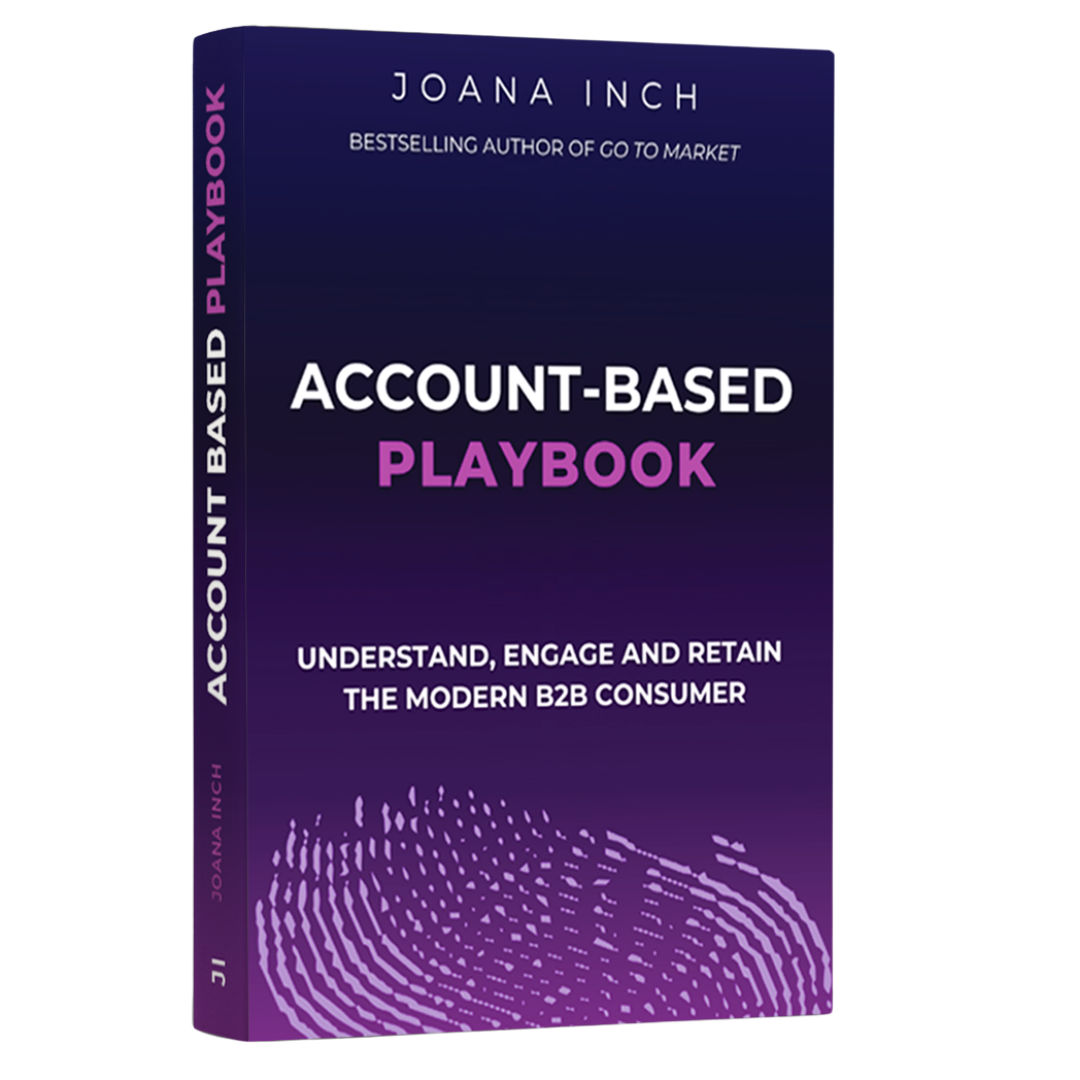
Account-Based Playbook: Understand, Engage and Retain the Modern B2B Consumer
The definitive ABM playbook for B2B SaaS and technology companies — covering how to identify, engage, and retain your highest-value accounts. Joana Inch's proven Milestone-Driven ABM framework, built from 15 years of running account-based programmes for enterprise technology companies across Australia and globally.
Request your free digital copy below — available to B2B marketing and revenue leaders.
Ready to build a programme that converts
Your digital marketing agency — built for B2B SaaS. Hat Media designs and executes digital marketing programmes for SaaS and technology companies across Australia and APAC — from ICP and strategy through to pipeline and revenue.



Our Awards